



Conference program




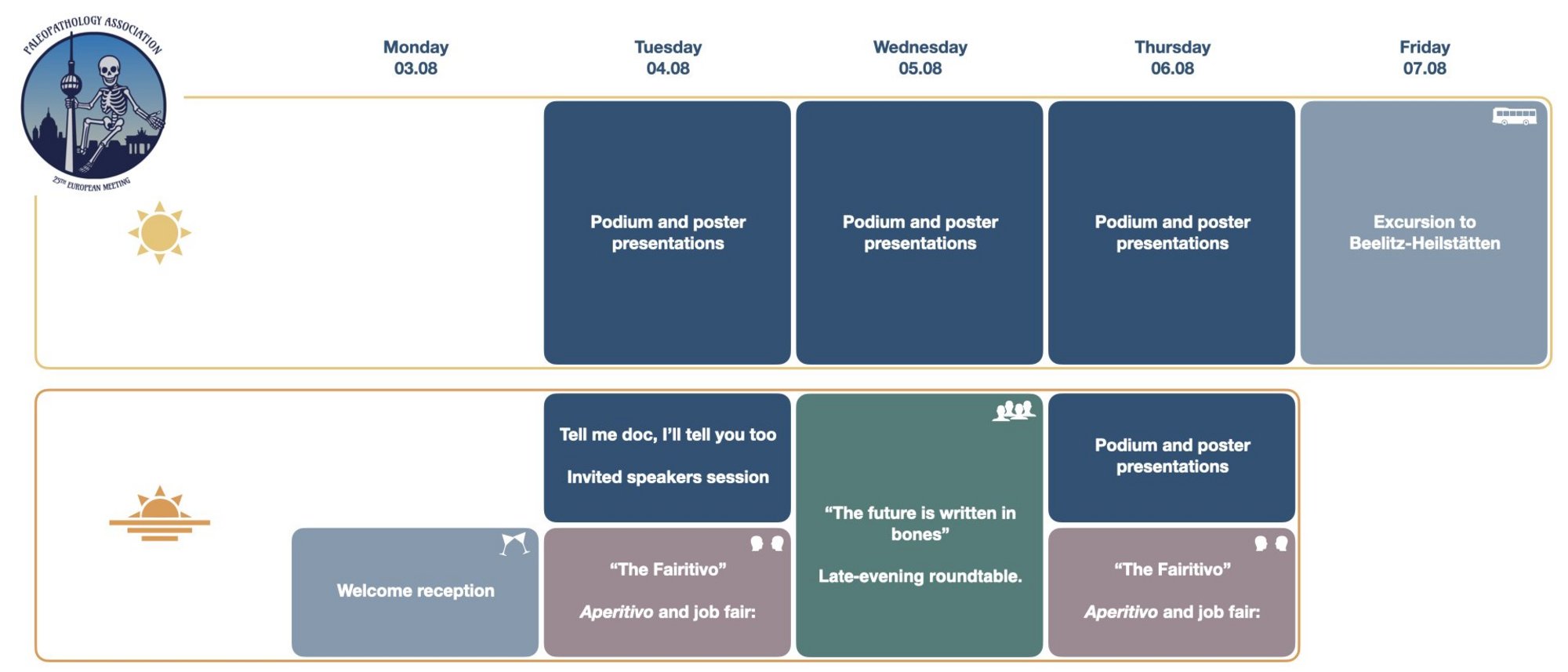
OPEN EVENT: 05.08, 17:30 - 19:00
THE FUTURE IS WRITTEN IN BONES
The wider public is invited to join attendees for an evening roundtable discussion about studying and exhibiting human remains.
The speakers will address pressing - and at times controversial - questions about recent advances and missed opportunities within the anthropological sciences. They will also engage in a dialogue on the ethical issues inherent in this field, its intersections with political agendas, and how anthropologists can, could, and have reshaped our understanding of what it means to be human.
OUR SPEAKERS

INVITED SPEAKERS SESSIONS: 04.08, 16:00 - 18:00
TELL ME DOC, I´LL TELL YOU TOO
This session will feature three thematic podia, each presented jointly by a paleopathologist and a medical scientist as invited speakers. By bridging the past and present of health and disease studies, this format aims to strengthen collaboration between the two disciplines and to inspire new, mutually beneficial research questions.
Session 1 - TB or not TB: Infection or autoinflammation?
Session 2 - Cancer’s Biological Continuity and Translational Potential to Today: A Cross-Disciplinary Dialogue.
Session 3 - Trepanation, paleopathological and clinical perspectives.
SESSION 1 - TB or not TB: Infection or autoinflammation?
©
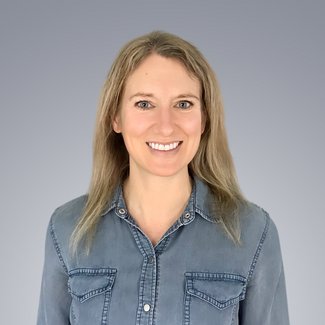
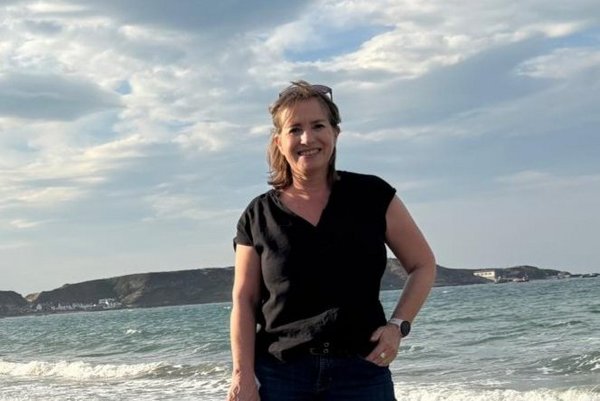
Mary Lewis
Mary Lewis is Professor of Bioarchaeology and Departmental Director of Teaching and Learning| University of Reading at the University of Reading, UK (BA Leicester; MSc Bradford, PhD Bradford). She specialises in the palaeopathology of children and adolescents. Her publications include the Palaeopathology of Children (2018) and Bioarchaeology of Children (2007). She has served as Associate Editor for the AABA and IJPP, and as President of the Palaeopathology Association (2023-25). In her free time Mary enjoys long country walks with her Cockapoo, Lola.
©
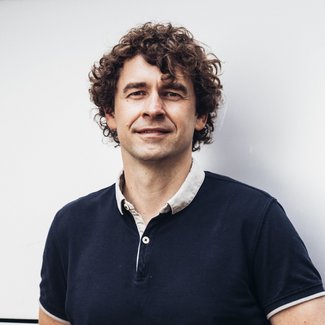
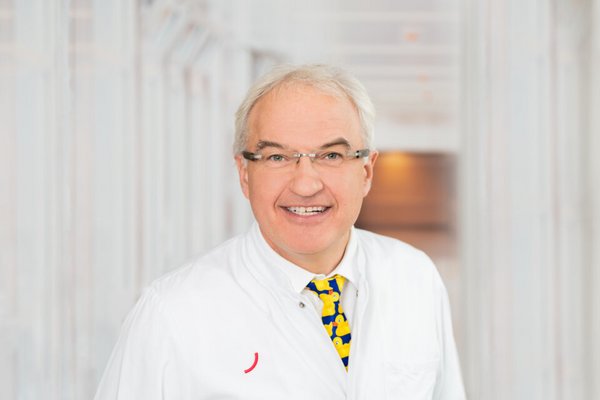
Hermann Josef Girschick
Hermann Josef Girshick is the chief doctor of the clinic of Paediatrics and Adolescent Medicine at the hospital "Vivantes Klinikum Friedrichshain" in Berlin. He is a member of the German Society for Pediatric and Adolescent Medicine, the Society of Child and Adolescent Rheumatology, and the European Society of Pediatric Rheumatology, among others. His published works range from investigating the treatment of juvenile idiopathic arthritis to exploring the prevalence of infectious diseases among children. His research focuses on the pathogenesis of chronic osteomyelitis and chronic inflammatory bone lesions, the pathogenesis of Hypophosphatasia, and B-cell pathophysiology in autoimmunity.
SESSION 2 - Cancer’s Biological Continuity and Translational Potential to Today: A Cross-Disciplinary Dialogue.
©
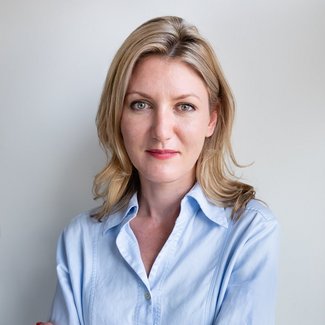
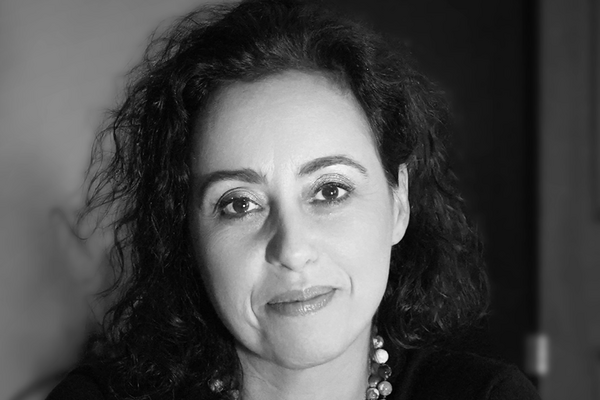
Carina Marques
Carina Marques holds a Ph.D. in Biological Anthropology from the University of Coimbra, Portugal, and is currently an Associate Professor in the Department of Anthropology and the School of Integrative Biological and Chemical Sciences at The University of Texas Rio Grande Valley, Texas, USA. Her scholarly focus is on skeletal biology, bioarchaeology, paleopathology, and evolutionary medicine. Her research in paleopathology adopts a biocultural and diachronic approach to understanding health and disease through the study of the human skeleton, with a particular focus on novel methodological, theoretical, and epistemological approaches to malignant neoplasms. She is currently leading an NSF-funded project that employs spectroscopic analysis to study neoplastic bone lesions. In the field of forensic anthropology, Carina is leading a National Institute of Justice (NIJ)-funded project applying machine learning techniques to cementochronology for human identification. Additionally, her work addresses search and recovery of migrants who have perished along the U.S.-Mexico border.
©
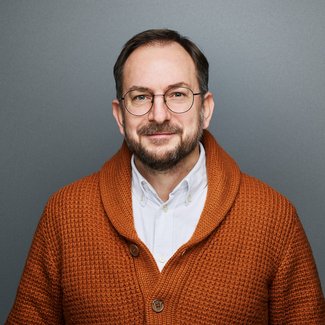
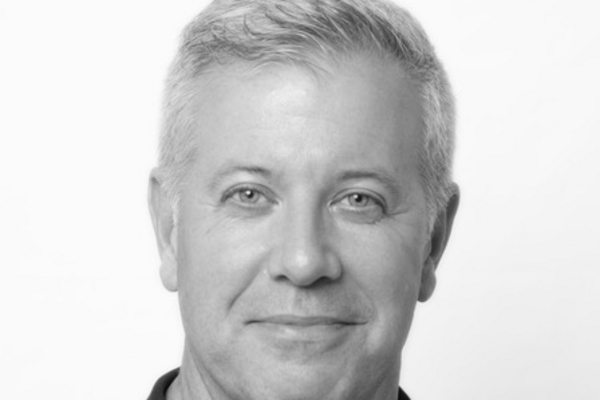
Adrian Daly
Adrian F. Daly is a Clinician-Scientist working in the fields of rare diseases in Endocrinology, Neuroendocrinology and Genetics with a specific interest in the pathophysiology and treatment of pituitary and other rare neuroendocrine tumors. He is an elected Fellow of the Royal College of Physicians of Ireland. Dr. Daly is based at the Department of Endocrinology, Centre Hospitalier Universitaire (University Hospital Center) of Liège, Belgium. His work has led to the discovery and characterization of the disease, X-linked acro-gigantism (X-LAG)- the most severe human gigantism phenotype, the discovery and characterization of familial isolated pituitary adenomas (FIPA) and the role of genetic mutations (e.g., GPR101, AIP, MAX) in neuroendocrine tumor syndromes. Dr. Daly is an active participant in the rare endocrine disease networks, such as Endocrinology European Reference Network (ERN) on Genetic Endocrine Tumor Syndromes and Pituitary disease. His work has been recognized nationally and internationally with awards from the Belgian Endocrine Society Annual Novo Nordisk Award, the Belgian Society of Internal Medicine Research Award and an Endocrine Society Endocrine Scholar Award.
SESSION 3 - Trepanation, paleopathological and clinical perspectives.
©
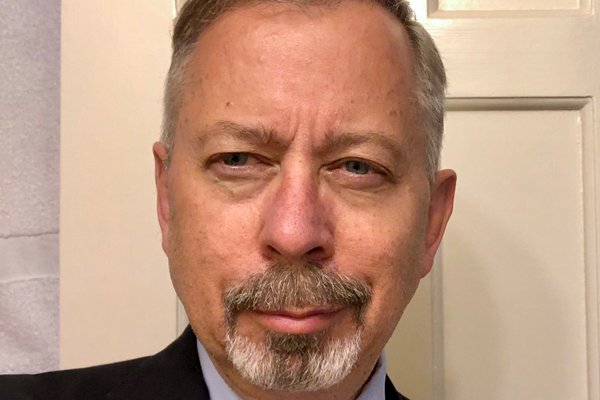
John Verano
John Verano is a biological anthropologist specializing in study of health, disease, and mortuary practices. His primary research area is Andean South America, with a focus on prehistoric populations of coastal and highland Peru. His research has been supported by grants from the National Geographic Society, the Stone Center for Latin American Studies at Tulane, and two Fulbright lectureships in Peru. His publications include studies of disease in skeletal and mummified remains, trepanation and other ancient surgery, warfare, human sacrifice, and mortuary practices. He is co-editor, with Douglas Ubelaker, of Disease and Demography in the Americas (Smithsonian Press 1992), and with Andrew Scherer, Embattled Bodies, Embattled Places: War in Pre-Columbian Mesoamerica and the Andes (Dumbarton Oaks 2014). His most recent book is Holes in the Head: the Art and Archaeology of Trepanation in Ancient Peru (Dumbarton Oaks 2016)
©
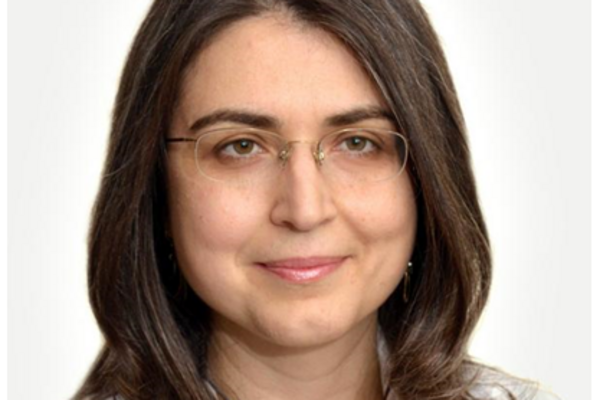
Emanuela Binello
Emanuela Binello, MD, PhD, ScD, is a neurosurgeon at Boston Medical Centre and a member of the faculty at the Boston University Chobanian & Avedisian School of Medicine. She is an active clinician and performs both brain and spine surgery to manage a number of conditions, including traumatic brain injury and brain tumours, as well as spine tumours, trauma and degenerative disease. Dr Binello also conducts scholarly research, having authored numerous publications in peer-reviewed journals. Relevant to this conference, Dr Binello has a special interest in trepanation in ancient times.
JOB FAIR: 04 and 06.08, 18:00 - 19:00
THE FAIRITIVO
Universities, publishers, and private companies working with human remains will showcase their resources, attracting new investors, stakeholders, and opportunities. At the same time, the event will serve as a platform for students and professionals to gain valuable insights into career paths and to connect with potential employers.
Our Exhibitors:

©
Hirox Europe
Leading provider of 3D digital microscopy for a wide range of applications, we are the proud inventor of video microscopy for over 40 years.
©
Artec 3d
A global leader in 3D scanning technology, made in Luxembourg and designed to revolutionise your workflow across a wide range of industries.
©
Melisch Archäologie KG
Your service provider for archaeological excavation, construction supervision & consulting.
©
Durham University, UK
We provide an education that challenges boundaries, is research-led and transformative and takes advantage of the latest digital technologies.